

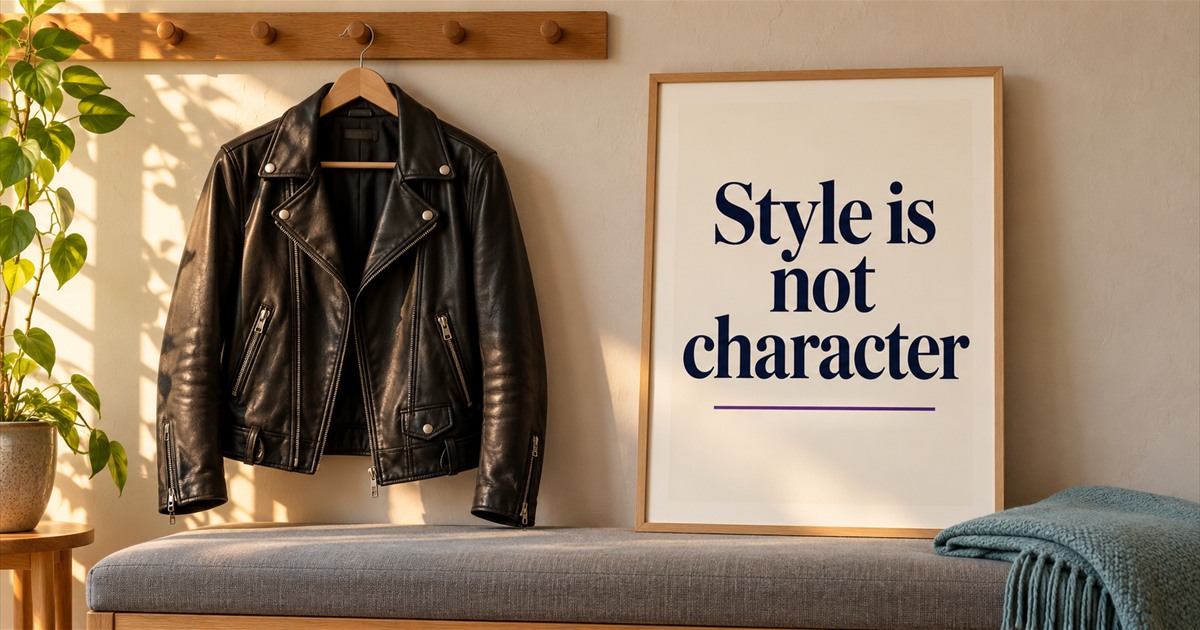
The “bad boy” is a familiar romantic image: confident, unconventional and difficult to pin down. You may enjoy that style or feel drawn to someone who seems exciting. Attraction itself is not a mistake, and a leather jacket, tattoos, an artistic career or a motorcycle does not reveal someone’s character.
The important question is how the person treats you. Confidence is different from control; spontaneity is different from ignoring consent. You can enjoy chemistry while still wanting honesty, reliability and room to make your own choices. These distinctions apply across genders and relationship types.
Separate the image from the actual behavior
Look at ordinary interactions, not just dramatic gestures. Can you disagree without being insulted? Can you keep friendships, make decisions and say no without pressure? Does the person respect the pace you want, including whether you want a relationship at all?
Someone can seem charming and still act harmfully. Someone with an unconventional appearance can be considerate and dependable. Neither a “bad” label nor a “nice” label replaces observation. You also do not owe a date to someone simply because they describe themselves as nice.
The National Domestic Violence Hotline’s warning signs include extreme jealousy, isolation, humiliation, sexual pressure and controlling decisions or money. Those behaviors are not evidence of unusually passionate love. You do not need to wait for physical violence before seeking support.
Notice what happens when plans change: Say someone you’re excited to see asks you to meet on short notice, but you already have plans. A respectful reply might be, “Have fun. Want to pick a day next week?” Repeated pressure to cancel deserves attention. You can enjoy feeling drawn to someone and still look for the ordinary signs of respect in our guide to everyday compatibility.
Notice whether you are becoming responsible for rescuing them
Caring about a partner’s difficulties is not the same as accepting responsibility for their life. Ask: “What support can I freely offer? What am I being pressured to give? Am I overlooking conduct that hurts me because I hope my love will change it?”
You can offer encouragement without becoming someone’s therapist, financial safety net or sole support. A history of addiction or time in prison does not automatically define a person’s character; focus on current conduct, honesty and boundaries rather than stigmatizing labels. You are still allowed to decide what circumstances you can or cannot take on.
A promise to change does not require you to remain in the relationship. Look for responsibility expressed through actions, not explanations that make you responsible for preventing future harm. You can wish someone well without dating them or managing their recovery.
Question harsh beliefs about what you deserve
If you catch yourself thinking “This is the best I can expect,” try asking what you would want for a friend in the same situation. Basic respect should not depend on becoming more attractive, more forgiving or perfectly confident. Someone else’s mistreatment is not proof that you have failed at self-love.
Our guide to compassionate self-talk offers a way to replace a sweeping judgment with a fairer statement. For example: “I feel attached to this person, and I still deserve to have my boundaries respected.” You do not have to stop feeling attracted before making a protective choice.
If you want help understanding a repeated pattern, a qualified counselor may provide a place to explore it without blame. A psychic reading cannot reliably identify a hidden childhood cause, diagnose a relationship problem or guarantee a safer partner. Spiritual reflection, if meaningful to you, remains optional.
Turn your preferences into concrete boundaries
Distinguish a preference from a boundary. You might prefer someone who shares your music tastes. A boundary concerns what you will participate in, such as refusing to share passwords or declining sexual contact you do not want. It is not a way to control another person’s choices.
For a conversation that feels safe, try a specific statement: “I am not comfortable sharing my passwords,” or “I want to keep seeing my friends.” Notice whether the response respects your decision. An apology followed by the same pressure is worth taking seriously.
You can make a short private list: What I want: honesty and independence. What I have observed: repeated pressure to cancel plans. What I need next: time to consider my options and speak with someone I trust. Keep notes only where it is safe to do so. There is no age deadline for choosing commitment, casual dating or no dating.
Prioritize safety when control or fear is present
If you fear retaliation, do not treat a direct confrontation or immediate breakup as a required next step. The Hotline’s personal safety-planning guidance covers support while experiencing abuse, preparing to leave and after leaving. An advocate can help you consider options suited to your situation.
In the United States, call the National Domestic Violence Hotline at 800-799-7233 or text START to 88788; message and data rates may apply. Internet use can be monitored, so consider a safer device or another safe way to contact support. Call 911 for immediate danger. Outside the United States, use local support and emergency services.
You do not need a perfect explanation of your attraction to ask for help. The goal is not to replace an exciting person with a supposedly boring one; it is to choose relationships where excitement does not come at the expense of dignity, consent or safety.
Honestly, I find this perspective quite misguided. Attracting bad boys isn’t always rooted in deep-seated issues. Sometimes, it’s just about chemistry! Not every attraction needs to be analyzed to death.
‘I don’t deserve love’? That’s just rich! Who knew dating was like playing poker? You just keep betting on the worst hands until someone finally shows up with the winning one!
This article offers a lot of food for thought regarding relationships and our choices. The psychological aspects discussed are fascinating and worth exploring further. Self-love is indeed crucial for healthy relationships.
‘Hot bad boy’? More like ‘hot mess’. Honestly, if you find yourself dating multiple addicts and drama kings, maybe the real issue lies within your own choices rather than blaming society’s archetypes.
What an insightful article! It really resonates with me. The way it explains the allure of bad boys is so true! It’s refreshing to see someone tackle this complex issue with such honesty. Well done!
‘Save him or he’ll save you’? Sounds like a sitcom plot twist waiting to happen! If only life were that easy—maybe we should all sign up for ‘relationship rescue missions’ next?
While I understand the points made, I must argue that labeling all bad boys as toxic oversimplifies things. There are nuanced situations where people can change and grow together, which isn’t mentioned here at all.
‘Rescue me!’ Seriously? This whole ‘bad boy’ obsession sounds like a poorly written romantic comedy plot gone wrong! Why not aim for a decent human being instead? Newsflash: not everyone needs saving!