


A rainbow orb may be a soft disk with tinted edges, a ring with several colors or a colored reflection spread across the frame. Check whether the colors are in the camera original and whether the spot follows a strong light source. The colors can still bring a meaningful association to mind.
Name the pattern of color
A colored halo near one edge has different clues from a cluster of small colored lights spread across a window. In the original, note where the colors start, whether the center is bright and what other colored objects were in view. Strong light can reflect inside the lens or off an extra filter. Nikon’s guide to ghost reflections shows how bright areas can leave additional shapes in a frame.
Keep the original and check neighboring pictures before applying a filter. A screenshot or shared copy may have been processed, so differences between those versions do not establish what colors were present at the moment.
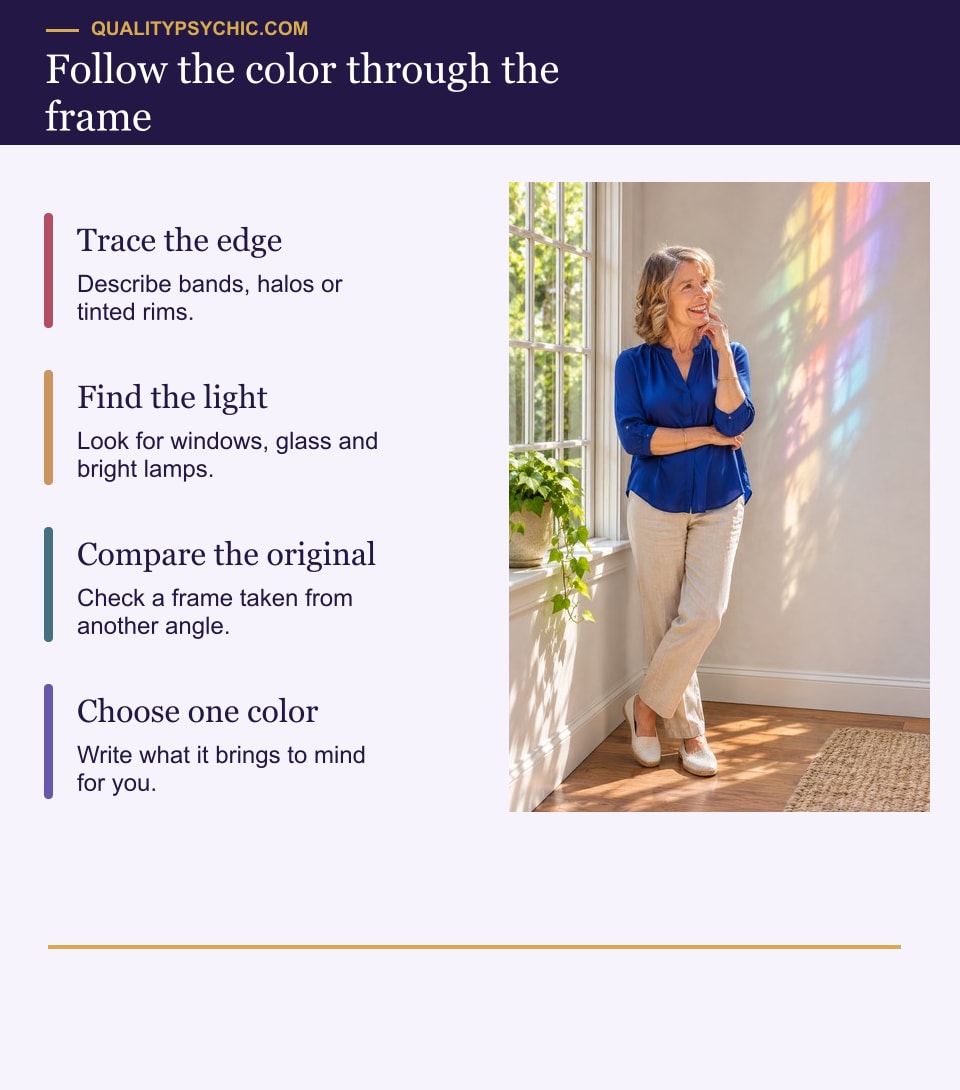
Read the visual guide as text
- Trace the edge. Describe bands, halos or tinted rims.
- Find the light. Look for windows, glass and bright lamps.
- Compare the original. Check a frame taken from another angle.
- Choose one color. Write what it brings to mind for you.
A rainbow orb by the front door
Imagine a pale ring with a violet edge in a picture of a new home. The door window has old beveled glass and sunlight is entering at an angle. The next frame was taken from a step to the side and the ring moved to the wall. A third frame, with the same door in shade, has a faint reflection elsewhere. Those variations give you a reason to compare how the glass and the lens caught the light.
You can make a note that the color brought a feeling of welcome to mind. The association can be meaningful without assigning a fixed message to the placement of each band.

Write one association and a next step
Ask which part of the rainbow you noticed first. If the green reminded you of a garden you miss, write that memory in a sentence. If the full band brought pride, hope or change to mind, name the actual event that made the color stand out. Pick one action that fits: share the original privately, grow a plant from a friend’s cutting, or leave the photo as it is.
People who see the same light can remember different things. Ask what a person noticed before telling them what the colors meant to you.
Frequently asked questions
1. Why do orbs sometimes have rainbow edges?
Reflections, flare and color effects near bright edges can produce tinted bands or rims. Start by comparing the camera original and nearby frames.
2. Do rainbow orbs have a universal meaning?
People give them different spiritual associations. A rainbow may suggest hope or transition to one person and bring back a specific memory for another.
3. Can colored glass make a spot look rainbow-colored?
Yes. Colored or beveled glass can change the light reaching a camera. Check whether the colors shift as the scene or angle changes.
4. Can I tell from an edited copy what made the color?
An edit can change both color and contrast. Compare the original and neighboring frames when possible.
5. How can I use the picture for reflection?
Choose a color you noticed, write what it reminds you of and decide if there is a memory or practical step worth keeping.