

Sensitivity / connection / boundaries
Perhaps you are the person friends turn to when they need to talk. You notice a change in someone’s tone, feel moved by a stranger’s story, or need a little quiet after a busy room. If the word empath helps you describe that depth of feeling, it can offer a reassuring way to begin understanding yourself.
Your sensitivity deserves care, not a test
These eight signs are reflection prompts, not a score, diagnosis or proof of psychic ability. You do not need to fit every pattern, adopt a special identity or carry everyone else’s emotions to be a caring person.
What does being an empath mean here?
In this guide, empath is a self-description for someone who relates strongly to emotional sensitivity and empathy. You might understand that sensitivity in ordinary terms, through a spiritual belief in emotional energy, or through a combination of the two. The label is useful only if it helps you respond to your experience with greater clarity and kindness.
Some people use psychic empath for a belief that they receive emotional impressions beyond the usual senses. That spiritual interpretation is different from establishing what another person feels or thinks. Being deeply affected by a conversation does not give you access to someone’s private mind.
A helpful starting point is to separate three things. In this hypothetical example:
What you observe
“My friend is speaking more quietly than usual.” This describes something you noticed.
What you feel
“I feel concerned and a little unsettled.” This describes your own experience.
What you infer
“They must be upset with me.” This is one possible explanation, not an established fact.
You might ask, “You seem quieter today. Would you like to talk, or would you prefer some space?” Let their answer matter. They may describe something you had not considered, or they may not want to discuss it. Our guide to understanding intuitive impressions explores how to notice a feeling without forcing certainty.
Eight signs you may recognize in yourself
Read for the patterns that affect your life, rather than counting how many you can claim. For each one, the most useful question is: What would help me care for myself and connect with others more comfortably?
1. You need quiet time after socializing
You can enjoy people and still want a gentler pace afterward. A lively meal, a long family visit or several conversations in a row may leave you wanting silence rather than another activity.
Notice the details: was it the noise, the emotional subject, the length of the visit, too little sleep or having no opportunity to pause? Knowing what felt demanding gives you more options than deciding that every gathering drains you.
Try this: choose a manageable visit, leave room in your schedule afterward and plan a quiet transition you actually enjoy. Rest does not have to mean cutting yourself off from people you value.
2. Emotional conversations stay with you
A friend’s sadness may move you deeply, and a tense exchange may replay in your thoughts after it ends. You might describe this spiritually as “picking up” an atmosphere. You can respect that description while checking what you were already feeling before the conversation.
You do not have to decide that an emotion belongs to someone else before responding to your own need for a break. Nor does feeling uneasy show that another person is hiding something.
Try this: ask yourself, “What was my mood before this? What did I hear or see? What do I need now?” A few honest notes are more useful than an accusation based on a feeling.
3. Busy or emotionally charged places feel like a lot
You may notice a crowded shop’s noise, a waiting room’s uncertainty or the memories attached to a familiar place. Several kinds of discomfort can arrive together. If “heavy energy” is your spiritual language for that experience, also look for a practical adjustment you can make.
A shorter visit, a quieter time or a permitted break may fit the situation better than trying to push through without a plan. A difficult atmosphere is not, by itself, evidence of danger or a reason to miss necessary healthcare.
Try this: identify one specific demand and one realistic adjustment. “The noise is tiring; I can step outside briefly” gives you an action without requiring a conclusion about unseen forces.
4. People often choose you as their listener
Perhaps you remember details, ask thoughtful questions or give people room to speak. Being trusted can feel meaningful. It can also become tiring if every conversation turns into a request for support and your own needs never enter the room.
The question is not whether you care enough. It is whether the support is freely chosen, manageable and part of a relationship that leaves space for you too. A caring friend is not required to act as someone’s therapist or solve every difficulty.
Try this: ask, “Would you like me to listen, or help think through options?” Then offer a limit you can keep: “I have fifteen minutes now.”
5. Stories, places or keepsakes move you deeply
A film, a piece of music or an inherited object may bring a strong emotional response. You may experience that as a sense of connection, remembrance or spiritual significance. There is room to value the feeling without proving exactly where it came from.
With an antique or second-hand item, distinguish its documented history from the impression it gives you. An uneasy association is not verified information about a previous owner, and a comforting association does not establish an object’s practical safety.
Try this: name what the item or story means to you. For a safety decision, check condition and relevant product information rather than relying on the emotional impression alone.
6. You notice emotional strain in your body
You might notice a tense jaw, tight shoulders or stomach discomfort during a difficult period. The NHS guide to stress lists physical symptoms including muscle tension, headaches and stomach problems. Those symptoms are not a way to confirm psychic sensitivity or identify someone else’s “negative energy.”
Paying attention to your body can be useful without assuming a spiritual explanation accounts for everything. New, persistent or concerning symptoms deserve appropriate medical advice; do not diagnose yourself through this list.
Try this: note when discomfort appears and what was happening around it. Bring relevant concerns to a qualified healthcare professional rather than treating them as proof of an empath gift.
7. You place meaning in intuitive or spiritual impressions
A dream, a sudden image or a feeling about a conversation may feel important to you. You can explore that through prayer, journaling or another practice that fits your beliefs. Personal meaning does not require you to claim certainty about another person’s intentions.
If an impression concerns someone else, choose a respectful question rather than telling them what they “really” feel. If it seems to predict an event, keep the original wording and notice outcomes that do not fit as well as apparent matches. See our guide to thinking clearly about psychic predictions.
Try this: write, “This is an impression I want to reflect on, not something I know about another person.” Then choose a next step that respects their privacy and choice.
8. You are learning where caring ends and responsibility begins
You may feel a strong pull to make everyone comfortable, say yes quickly or keep checking whether someone is okay. Notice whether you are choosing to help or agreeing because you are afraid of disappointing them.
Caring and taking responsibility are different actions. You can listen without deciding for someone, offer help without being endlessly available, and feel compassion without accepting disrespect. You might choose to talk after dinner but not during your workday. That sets your availability without asking the other person to stop feeling upset.
Try this: finish the sentence, “I can offer ___, but I cannot take responsibility for ___.” Make the first part small enough to be honest.
A boundary sequence for a difficult moment
You do not need to stop being sensitive to set a limit. Try this sequence when it is safe to pause and decide what you can offer.
- Notice. Name the situation and your reaction: “This conversation has become intense, and I feel tired.” Stay with what you know.
- Check. Ask what support is wanted, then check your time, capacity and safety. Listening, practical help and professional support are different kinds of help.
- Choose. Offer one manageable action, decline or step away. You may care about the person and still be unavailable for this conversation.
- Follow through. Keep the limit you stated. Give yourself a transition afterward instead of reopening the conversation every time you feel guilty.
Words you can adapt
For a friend: “I care about what you’re going through. I can listen for a little while, but I can’t stay on the phone tonight.”
For a repeated request: “I’m not available for this conversation today. I hope you can reach someone who has capacity to help.”
For an intrusive question: “That is something I prefer to keep private.”
These are optional examples, not scripts you owe anyone. If contact is unsafe, threatening or coercive, you do not need to complete a conversation or justify leaving. Prioritize safety and appropriate support.
Give your spiritual practice a practical companion
A visualization, prayer or quiet ritual may help you mark the end of an emotionally demanding day. If imagining a protective light is meaningful to you, pair it with a concrete choice: silence a nonessential notification, decline a commitment or make time to rest. The image is a symbolic reminder, not a guaranteed shield against illness, manipulation or physical danger.
You do not need to purchase cleansing tools to deserve a boundary. Our guide to spiritual boundaries and practical protection explores ways to keep a practice connected to choices you can make.
Keep connection in the picture too. A quiet evening can be restorative; having no one you can turn to is a different situation. Choose people and activities that leave room for your needs, and consider grounding alongside spiritual reflection when interpreting every experience starts to crowd out daily life.
A short reflection note, not an empath score
Choose one recent situation and answer these questions. There is no threshold that tells you how empathic, spiritual or deserving of support you are.
What would make next time easier?
- Situation: What happened, without guessing someone else’s thoughts?
- Feeling: What did I notice in myself before, during and afterward?
- Need: Was I looking for quiet, reassurance, information, rest or a clearer limit?
- Choice: What is one practical adjustment I could try next time?
- Review: Did that adjustment help, or would a different kind of support be better?
For example, after a busy family meal you might notice that several simultaneous conversations were tiring. Next time, you could plan a shorter visit or take a quiet break. That is a useful discovery about your needs whether or not you use the empath label.
When you need more than a quiet evening
If distress persists, disrupts your sleep or daily activities, or leaves you struggling to cope, seek help from a qualified healthcare or mental health professional. You do not need to decide whether you are an empath before asking for support, and spiritual practices need not replace assessment or treatment.
The National Institute of Mental Health’s self-care guidance discusses setting priorities, staying connected and seeking professional help for distressing symptoms. The NHS stress guide also recommends help when you are struggling to cope or the things you have tried are not helping.
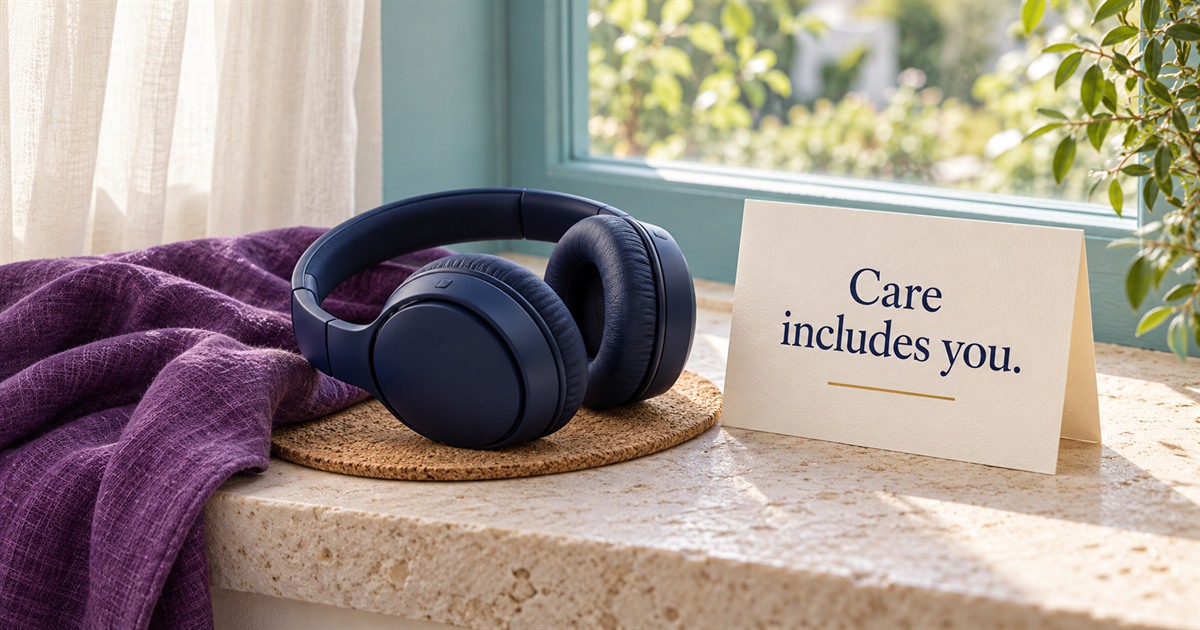
Your sensitivity does not need to become a burden you must prove you can carry. Keep the parts of the empath label that help you understand yourself, leave the parts that make you feel trapped, and allow care to include you.
I love how this article romanticizes being an empath! Sure, feeling everyone’s emotions sounds poetic until you’re sobbing in public because someone else is sad. Maybe some boundaries wouldn’t hurt… 🤷♂️
It’s fascinating how many people resonate with the traits of psychic empaths! This piece provides useful insights on self-care and grounding techniques that can help manage emotional energy. It’s definitely worth considering for those who feel overwhelmed.
…This article touches on a profound topic that blends psychology and spirituality. Understanding the challenges faced by empaths is essential in fostering empathy within society as a whole.
Honestly, this sounds like a bunch of pseudoscience to me. While I respect people’s beliefs, claiming to feel energies and auras seems far-fetched. Let’s stick to facts rather than metaphysical conjectures, shall we?
I found this article to be incredibly enlightening! The way it delves into the intricacies of being a psychic empath really opened my eyes. I never realized how much energy affects our emotional well-being. 🌟
*If only I could feel people’s emotions through snacks; then I’d know what chips to bring to parties! 😂 But seriously, it’s an interesting concept—perhaps there’s an empath chip flavor out there somewhere!
I mean… if being an empath means I’m just overly sensitive? Sign me up for emotional support pizza instead! 🍕😂 But hey, if this helps people understand themselves better, then more power to them!
@RealistRay True! Just imagine having pizza as your protective bubble against negative vibes—what a delicious shield!
@QuirkyQing It’s not just about being sensitive; it’s about navigating energies effectively! But pizza does sound like a great coping mechanism!
While I appreciate the perspective shared here, I can’t help but question the validity of these claims about psychic abilities. Shouldn’t we rely on scientific evidence rather than anecdotal experiences? It’s crucial to maintain a balance between belief and skepticism.
@EmpathEllie, but without evidence, how can we trust these experiences? Emotional sensitivity is real, but attributing it to psychic powers feels like overreaching.
@DebaterDan, science doesn’t have all the answers yet! Many experiences are beyond current understanding. Just because something isn’t measurable doesn’t mean it lacks value or truth.