

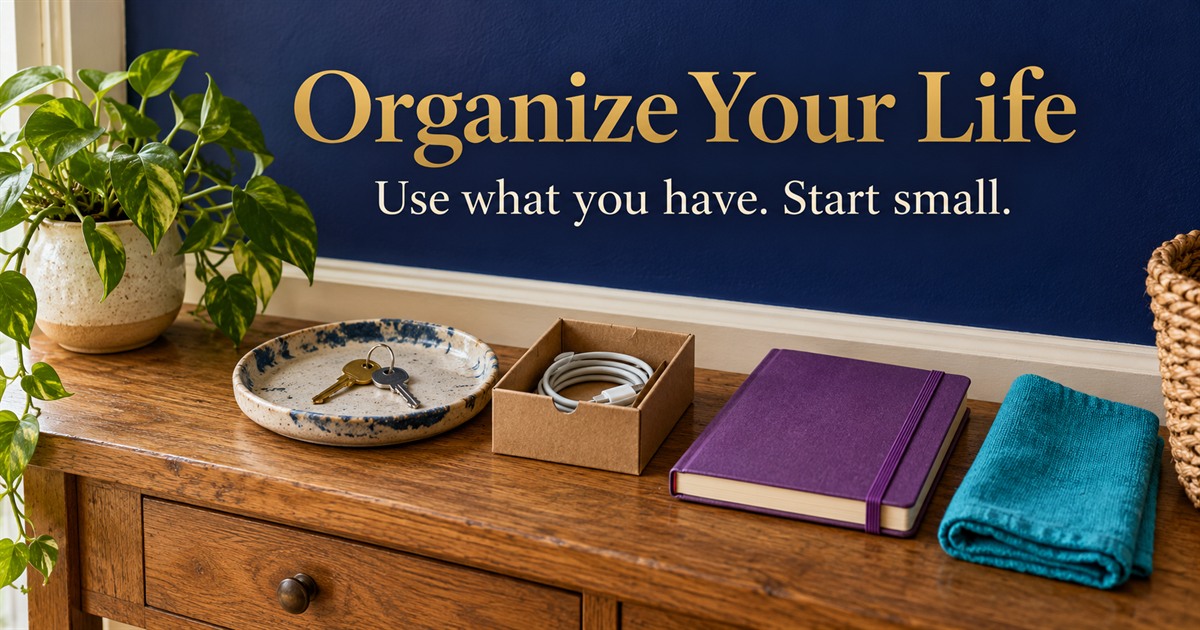
Organization does not have to mean a spotless home, matching containers or a new set of purchases. A useful system makes an everyday task easier for the people who actually use it. Start with one frustration—misplaced keys, crowded counters or forgotten appointments—rather than trying to reorganize your whole life at once.
These ten ideas adapt the tools and routines you already have. Choose what fits your space, mobility, energy and budget. None guarantees a particular amount of time or money saved, and needing help is not a failure.
1. Make cleaning equipment easier to use
Before replacing a vacuum, check its manual for filter care, blockages and suitable attachments. Keep the equipment somewhere you can reach without awkward lifting. If replacement is necessary, compare weight, maintenance costs and suitability for your floors—not just the advertised suction.
A better machine does not promise a particular cleaning schedule. Decide which areas need attention first and divide the job into manageable parts.
2. Give bathroom essentials a clear home
Group the items you use daily in a washable tray or existing basket. Separate occasional supplies so they do not crowd the sink. Measure before buying a cabinet, and avoid blocking access to fixtures or putting heavy items where reaching them is difficult.
In a shared bathroom, agree whose items go where. Keep medicines and cleaning products in appropriate secure storage rather than treating every available surface as interchangeable.
3. Separate jewelry and other small items
Use a divided box, small reusable pouches or a hanging organizer if it fits your space. Give frequently worn items an easy-to-reach location. Separating chains can reduce tangling, but storage should also suit the material and any care instructions.
Do a quick check of what you already own before buying more compartments. You may need fewer, clearer categories rather than another organizer.
4. Simplify the area around the kitchen sink
A stable, easy-to-clean holder can give a sponge and brush a home. Choose something that allows wet items to drain, and clean it regularly. Decorative matching sets are optional.
Keep detergent and other cleaning products in their labeled original containers instead of confusing them with food or drink. Put only the supplies you need near the sink; store extras appropriately elsewhere.
5. Choose lighting with safety in mind
Flameless candles avoid an open flame and melted wax, but “battery-operated” does not mean risk-free. Follow the product instructions and check that battery compartments are secure. The CPSC warns that accessible button and coin batteries can seriously injure children if swallowed. Seek immediate medical attention for a swallowed battery.
Keep loose batteries and small devices away from children and pets. A lamp you already own may meet your lighting needs without another purchase.
6. Set up a manageable plant-watering routine
Group plants by their individual care needs rather than assuming they all need water on the same day. Keep a small watering container nearby and use suitable saucers or trays to catch excess water.
A smaller, lighter container may be easier to carry even if it takes more trips. If you use a faucet attachment, check compatibility and instructions, watch for leaks and do not leave water running unattended. No setup guarantees a spill-free floor.
7. Store pet food with its information intact
The FDA recommends keeping pet food in its original bag or container, including placing the whole dry-food bag inside another storage container. This preserves the lot number and other details needed if a problem or recall occurs.
Choose a secure, cool, dry location and wash and dry storage containers between bags. Keep scoops clean. A lid alone does not guarantee freedom from moisture, mold or contamination. Arrange the supplies for comfortable access rather than lifting a heavy bag each time.
8. Contain kitchen scraps as you prepare food
Set a small bowl or suitable container beside your preparation area, then empty it into the appropriate waste or compost system. Check local compost rules instead of assuming every scrap belongs there.
Keep waste separate from food, empty it regularly and wash the container. If using a cabinet hanger, check that it fits securely and does not interfere with doors or movement. A spare bowl may work just as well.
9. Create a return spot for electronics
Give remotes and unused charging cables a consistent location, such as a drawer divider or tray. Label similar cables if that helps everyone in the household. Keep active charging arrangements consistent with device instructions, away from water and with cords clear of walking routes.
A simple rule—return the remote after use—is often more useful than a complicated storage system nobody follows.
10. Use fewer, clearer reminders
Choose one calendar or paper planner as your main reference. Add appointments when you make them, include travel or preparation time, and set reminders you can realistically act on. A shared calendar should contain only information you agree to share.
Before adding an app, check charges, renewal terms and privacy practices. The FTC advises reviewing app permissions and limiting unnecessary access. Do not put sensitive medical, financial or household information into a tool just because it is convenient. Built-in reminders or paper may be enough.
For a broader approach to manageable habits, explore small steps toward positive change. Pick one idea, try it for a week and ask: Is it easier to find or do what I need? Adjust what is not working before buying anything else.
‘Download free apps’? Seriously? While we’re at it, why not suggest we download happiness too? Technology isn’t always the answer—sometimes simpler solutions lead to greater peace.
You sound like you hate technology! Apps can genuinely help streamline organization; don’t knock it till you’ve tried it!
Exactly! Technology has made organizing so much easier; we should embrace it rather than resist progress.
While the article provides valuable insights, it’s essential to note that organizational methods vary significantly from person to person. What works for one may not work for another, and adapting these tips to fit your lifestyle is crucial.
Why do I need fancy storage containers when I have an entire room filled with clutter?! My motto: ‘If you can’t see the mess, it’s not really there!’ Cheers to living life unorganized!
That’s one way to live! But wouldn’t it be more enjoyable if you could actually find things without digging through piles?
This post is just another example of ‘how to waste your money’ on unnecessary storage solutions. Not everyone can afford all these fancy organizers. How about some real-life advice instead?
This article is fantastic! I never realized how disorganized my life was until I read this. The tips on getting a better vacuum cleaner and bathroom storage are especially helpful. Thanks for sharing!
I agree! It’s amazing how a few simple changes can make such a difference. I implemented some of these tips, and my home feels so much more peaceful now.
Peaceful? More like boring! Who needs organization when you can just embrace the chaos? Life’s too short for tidying up!
‘Organizing’ sounds good in theory, but isn’t it just a temporary solution? You declutter today, but what happens tomorrow? Isn’t this an endless cycle we should question instead of blindly following?
‘Get a better vacuum cleaner?’ Wow, who knew that was the secret to happiness? Maybe next week they’ll publish ‘How to Organize Your Happiness: A Guide to Buying More Stuff!’ What a world!
*sigh* Just what we need—another article telling us how to live our lives! Next, they’ll suggest buying colored paperclips for our happiness levels or something equally absurd!