

“Psychic attack” is a term some people use for the belief that another person’s negative intentions or an unseen influence can harm their energy or aura. It is a spiritual interpretation, not a medical diagnosis. Feeling shaky, exhausted, depressed or frightened does not establish that an attack has occurred or identify someone responsible.
Your distress can be real even when its cause is uncertain. You do not have to settle a supernatural explanation before getting support. Start with what you can observe, take physical and mental health symptoms seriously, and avoid anyone who turns your fear into pressure to pay.
What people mean by a psychic attack
In some spiritual discussions, the phrase describes feeling overwhelmed after conflict, unwelcome attention or an upsetting experience. References to a clouded aura, lost energy or white-light protection belong to that belief framework. They are not measurements that establish illness, another person’s intentions or a need for treatment.
You can describe the experience without treating the explanation as settled: “I felt frightened after that conversation,” or “I have been sleeping badly.” Those descriptions give you something concrete to discuss. An argument, a run of setbacks or a troubling dream is not evidence that someone has sent harmful energy.
Having spiritual beliefs does not, by itself, establish a mental health condition either. The practical question is how you are feeling and functioning, whether you are safe, and what support you need—not whether you can prove an invisible cause.
Why the usual “symptoms” do not prove an attack
Headaches, tiredness, nightmares and reduced interest in activities are not specific to a psychic-attack belief. Treat them as experiences worth understanding, not as a checklist for confirming a curse.
- Headaches
- The NHS headache guide describes several ordinary causes and recommends medical help for recurring or worsening headaches. A headache is not evidence that your chakras need balancing.
- Fatigue
- Sleep difficulties, life stress, medicines and health conditions can contribute. The NHS recommends assessment when unexplained tiredness lasts a few weeks or affects daily life.
- Nightmares
- Stress, illness and some medicines are among possible contributors. The NHS advises seeking help for regular nightmares that affect sleep and everyday life. A dream does not identify an attacker.
- Low mood or loss of enjoyment
- These can be symptoms of depression. The National Institute of Mental Health recommends talking to a health care provider when depression symptoms persist.
This list does not diagnose the cause of your symptoms. Do not assume that everything is “just stress,” but do not replace assessment with an aura reading either. Even if an initial appointment does not explain a symptom, an unanswered question is not proof of a psychic attack.
A short response when you feel unsettled
If you are not in immediate danger, try one small step rather than repeatedly checking whether an unseen attack is present:
- Describe what happened. Separate an observation, such as receiving an upsetting message, from an interpretation about hidden intentions.
- Notice your surroundings. Look at an ordinary object or notice the support of your chair. Keep your eyes open if that is more comfortable; stop if an exercise increases distress.
- Check an ordinary need. Consider whether you need a meal, rest, a break from the conversation or help with a practical task.
- Choose support. Speak to someone you trust or arrange appropriate professional care. You can say, “I am frightened and having trouble sleeping,” without needing agreement about the cause.
Our practical grounding guide explains optional present-moment exercises and their limits. A calming moment can be useful, but it does not prove that an attack was removed. You do not have to perform a ritual perfectly before seeking help.
Address observable conflict without accusations
If someone insults you, pressures you for money or repeatedly sends unwanted messages, focus on those actions. You may decide to limit a conversation, stop responding or seek advice about the specific situation. You do not need to label someone an energy attacker to set a boundary.
A made-up comparison shows the difference between a boundary and an unsupported explanation:
- Name the behavior and your response
- “I will not continue this conversation while I am being insulted.”
- Do not claim an unverified cause
- Blaming a person’s aura for a headache asserts a cause that has not been established.
Avoid confronting, monitoring or retaliating against a person because of a dream, a reading or a feeling.
If there are actual threats or violence, prioritize safety and appropriate local assistance rather than a cleansing ritual. You do not owe affection, forgiveness or contact to someone who is harming you. Focusing on “love for others” should not mean ignoring your own needs.
Keep spiritual comfort optional and low-risk
If prayer, quiet reflection or imagining white light is comforting, you may use it as a personal practice alongside ordinary care. Treat it as symbolic, not as a guaranteed shield. You can also skip spiritual imagery entirely and talk with a friend or take a quiet break.
You do not need smoke, flames, essential oils or crystals under your pillow to respond to distress. The practices described here do not require purchases or special objects. Do not stop prescribed medication, cancel care or wait for a chakra cleansing before seeking assessment.
A practice that leaves you more frightened, more isolated or preoccupied with checking for threats is worth stepping back from. Our grounding and spiritual escapism guide offers questions about whether a routine supports everyday life or helps you avoid a problem.
Be wary of paid curse-removal pressure
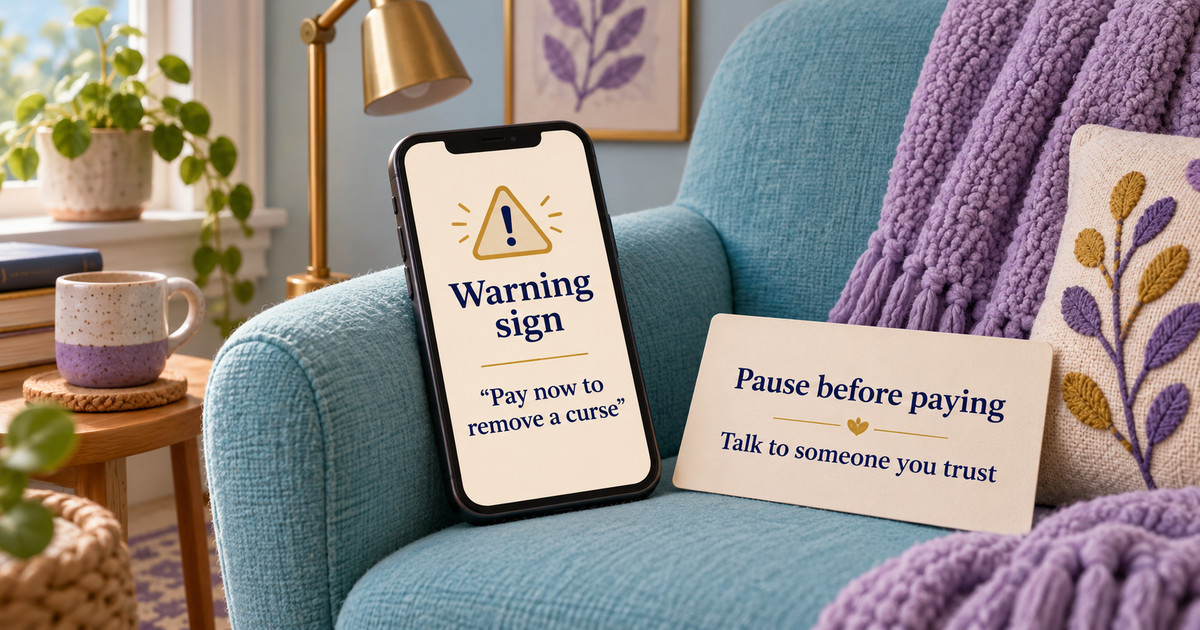
A claim that only one reader can remove an attack is not verification that the attack exists. Be particularly cautious when fear is followed by urgent payment demands, repeated additional fees or instructions not to discuss the service with anyone else.
The U.S. Postal Inspection Service warns about psychic scams involving promises to remove curses or guarantee health, wealth or fortune. It advises checking total and hidden costs and talking to someone you trust before engaging a service. A frightening prediction is not a reason to hand over bank details or keep sending money.
You can pause a purchase, keep the messages and ask for independent help. If a suspected scam used the U.S. Mail, the Postal Inspection Service provides a reporting route on its warning page. No spiritual adviser should be treated as a substitute for medical assessment.
When professional or urgent help matters
Arrange health care for symptoms that persist, worsen or interfere with sleep, work or daily responsibilities. If fear that someone is harming you becomes difficult to question or keeps you from functioning, tell a health care professional what you are experiencing. You deserve help with the distress without having to defend a spiritual explanation.
You can respect personal spiritual meaning while refusing unsupported explanations, accusations and promises. The next useful step is care for the situation you are actually facing: support, a boundary, practical assistance or professional treatment.
While I can understand the need for self-care, labeling negative feelings as ‘psychic attacks’ feels like an oversimplification. We all have bad days; it doesn’t mean we’re under attack from some unseen force!
Honestly, this sounds like pseudoscience to me. There’s no real evidence supporting the idea of psychic attacks. It seems like a way for people to blame their problems on external forces instead of addressing them directly.
This article raises some interesting points about energy and auras. I appreciate the detailed description of symptoms related to psychic attacks. It’s fascinating how our emotions can affect our overall well-being.
‘Cleansing your aura’? This is just another way to distract from real issues people face every day. We need practical solutions, not mystical jargon that won’t help anyone in crisis.
‘Psychic attacks’? Really? Sounds like something out of a cheesy horror movie! Next thing you know, they’ll be selling crystal shields on infomercials at midnight!
‘Crystal shields’? That’s hilarious! Maybe I should start charging people for ‘spiritual cleansing’ sessions while wearing a cape and waving a magic wand!
I found this article incredibly enlightening! The symptoms of psychic attacks are something I’ve never considered before. It’s great to see more awareness around mental and spiritual well-being. I’ll definitely be trying some of these remedies!
If psychic attacks are real, then my boss must be a master at them! Every Monday feels like an attack on my sanity! Maybe I should start smudging my office desk instead of just cleaning it!
‘Energy fields’ and ‘auras’—interesting concepts! It’s intriguing how many cultures recognize the impact of emotional stress on physical health. This article could spark deeper discussions on mental health approaches.